
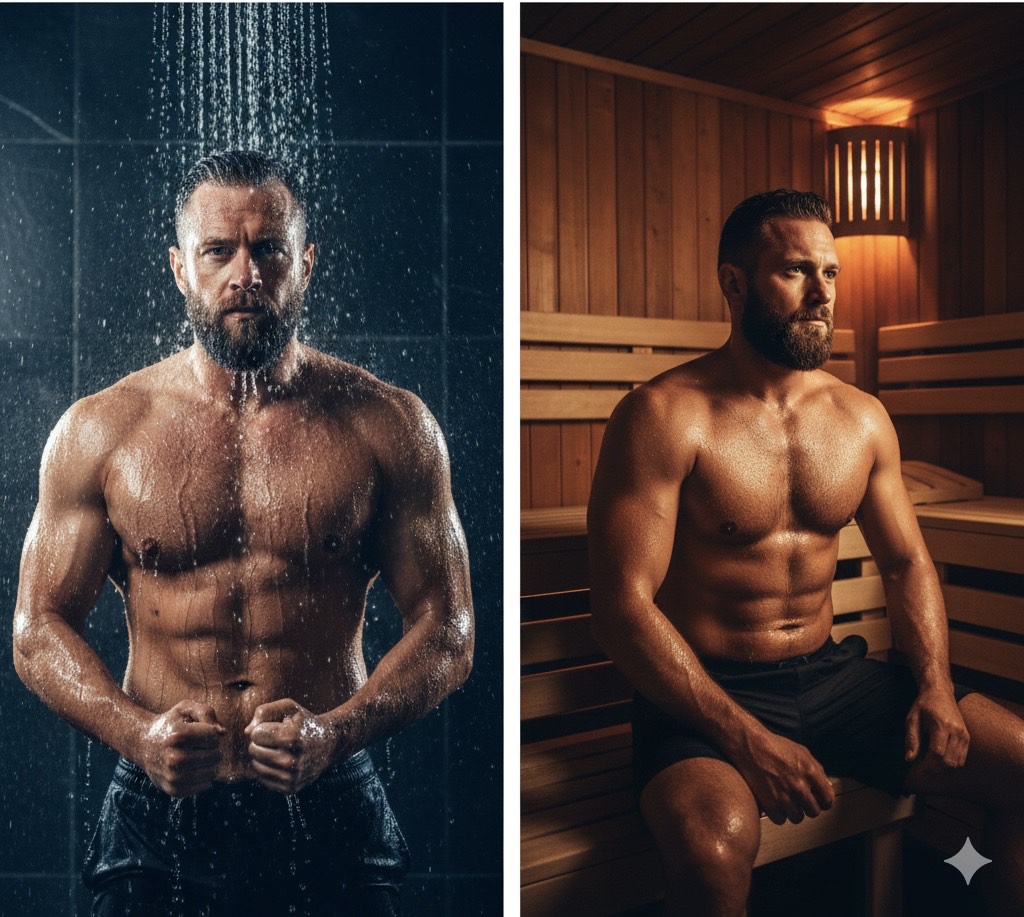
Cold Showers: What the Evidence Actually Suggests
Cold exposure can be useful, mainly through nervous-system and recovery effects:
- Increases norepinephrine, alertness, and focus
- May help reduce inflammation and improve stress resilience
- Does not reliably raise testosterone in a sustained, clinically meaningful way
In other words, cold exposure can support performance and recovery, but it is not a dependable testosterone booster.
Sauna: Benefits That Are Clearly Worth It
Regular sauna use shows more consistent downstream benefits:
- Improves endothelial function and vascular flexibility
- Reduces cardiovascular strain and supports circulation
- May indirectly support testosterone by lowering chronic stress load and cortisol
When hormonal benefits occur, they are usually a byproduct of better recovery, circulation, and stress control.
How to Use Them Intelligently
- Sauna 2–4 times per week as a recovery tool
- Short cold showers — no extremes, no ego
- Never replace fundamentals like sleep, strength training, nutrition, and metabolic health with cold or heat protocols
Cold and heat are amplifiers, not hormonal pillars.
Conclusion
Cold showers and sauna can enhance recovery, circulation, and stress regulation — but testosterone is built on the basics. Use temperature exposure wisely, as a complement, not a replacement for the foundations of male health.