
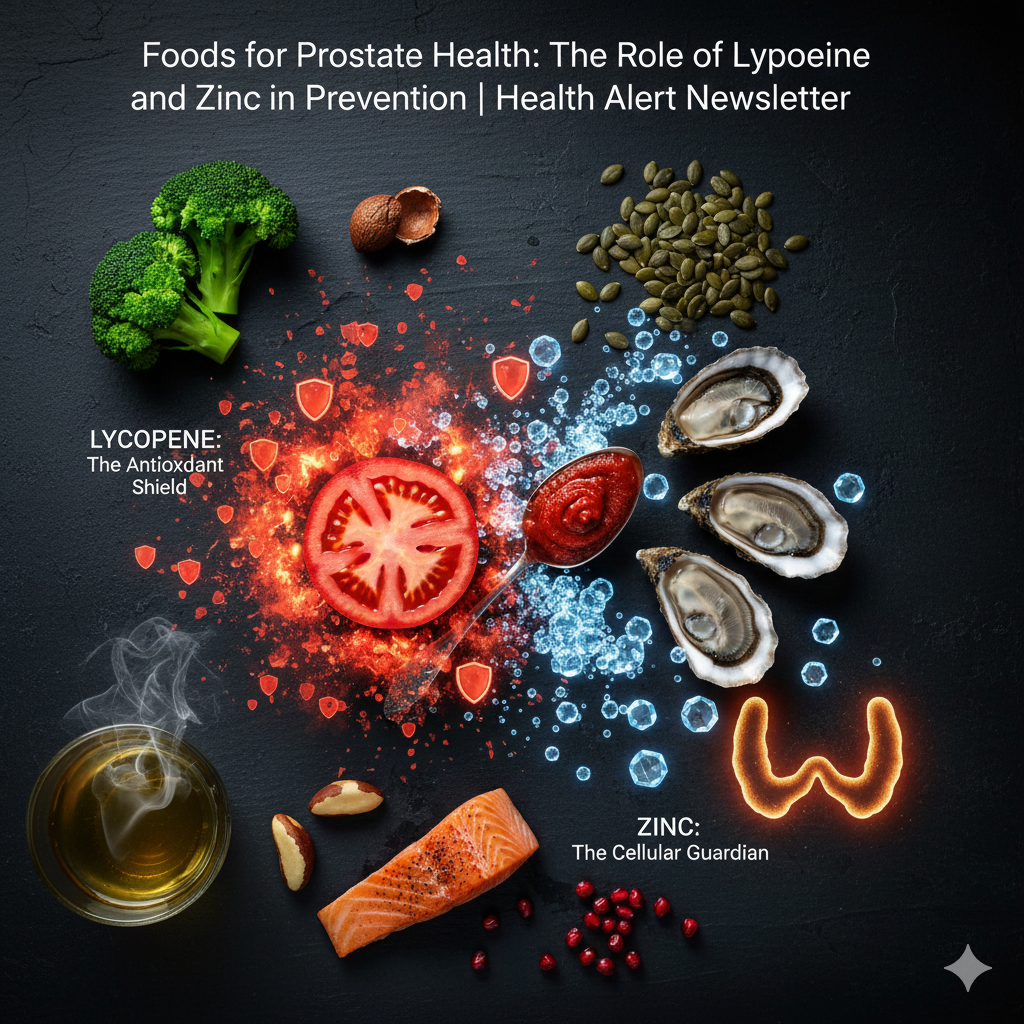
Lycopene: The Silent Protector
Lycopene is a powerful antioxidant, especially concentrated in:
- Cooked tomatoes, where heat increases its bioavailability
Lycopene helps reduce oxidative stress in prostate tissue and has been associated with a lower risk of benign prostatic hyperplasia (BPH) and abnormal PSA changes. Its benefits are most evident with regular intake over time, supporting long-term prostate protection rather than short-term symptom relief.
Zinc: Essential but Often Overlooked
Zinc is found in high concentrations in a healthy prostate and plays several critical roles:
- Regulates inflammatory processes within prostate tissue
- Supports normal cell growth and repair
- Contributes to male hormonal function, including testosterone metabolism
Zinc deficiency has been linked to prostate dysfunction and impaired immune response, making adequate intake essential for long-term prostate health.
How to Apply This in Practice
Simple dietary strategies can meaningfully support prostate health:
- Cooked tomatoes with olive oil 3–4 times per week to improve lycopene absorption
- Zinc-rich foods such as meat, eggs, seeds, and seafood
- Avoid extremely restrictive or micronutrient-poor diets, which accelerate inflammatory aging
Nutrition does not merely treat symptoms — it shapes the biological environment in which the prostate ages.
Conclusion
Consistent intake of protective nutrients like lycopene and zinc helps create conditions that favor long-term prostate health, function, and resilience against age-related changes.