
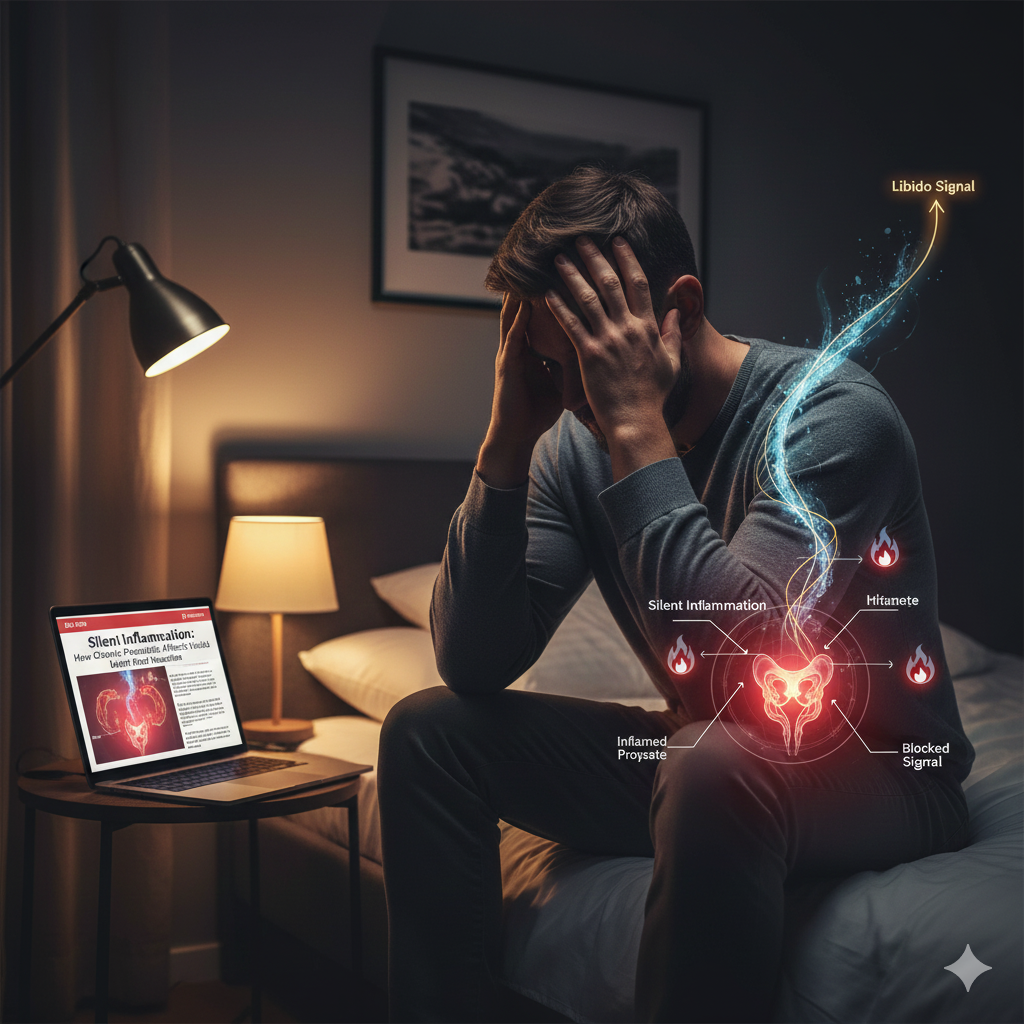
Persistent inflammation in the prostate disrupts nerve signaling, local blood flow, and sexual responsiveness, gradually undermining sexual health even in men with otherwise normal hormone levels.
Subtle but Important Symptoms
Chronic prostatitis may present with signs that are easy to dismiss:
- Mild pelvic discomfort
- A feeling of pressure or heaviness in the perineal area
- Reduced sexual desire
- Inconsistent or unreliable erections
These symptoms often fluctuate, making the underlying problem harder to recognize and delaying proper evaluation.
Why Inflammation Suppresses Libido
Chronic prostate inflammation affects sexual function through several interconnected mechanisms:
- Increased inflammatory cytokines: Impair hormonal and neural signaling
- Disruption of nitric oxide pathways: Reduces vascular relaxation and penile blood flow
- Chronically elevated cortisol: Suppresses testosterone action and sexual desire
The combined effect is reduced libido and performance, even when testosterone levels appear “normal” on lab tests.
An Effective Strategy
Successful management requires a broader, more integrated approach:
- Treat inflammation, not just infection, since many cases are non-bacterial
- Adjust diet and gut health, as intestinal inflammation can fuel pelvic inflammation
- Evaluate stress and sleep, both of which strongly influence inflammatory load
Addressing only one factor often leads to incomplete or temporary improvement.
Low libido is not always hormonal — very often, it is inflammatory.
Conclusion
Recognizing and treating silent inflammation can restore sexual function, energy, and quality of life without unnecessary hormone therapy. Addressing the root cause is often the key to lasting improvement.