
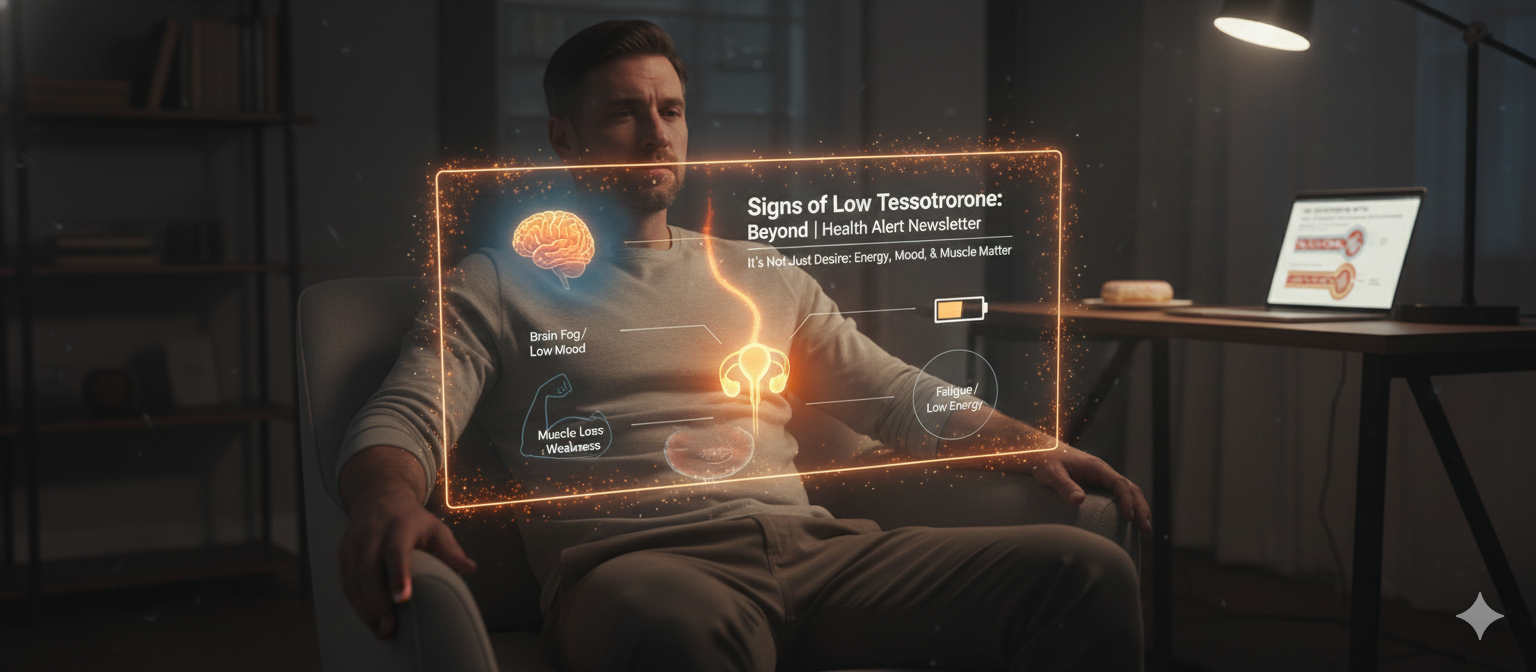
Common Signs Outside the Bedroom
Low testosterone often shows up in everyday life long before it affects sexual desire:
- Persistent fatigue despite adequate sleep
- Difficulty concentrating or “brain fog”
- Loss of strength and muscle mass
- Increase in body fat, especially around the abdomen
- Reduced motivation, drive, and initiative
These changes are frequently attributed to stress or aging, allowing the underlying hormonal imbalance to go unrecognized.
Why This Happens
Testosterone decline is rarely caused by a single factor. It is usually driven by a combination of:
- Aging combined with chronic inflammation, which suppresses hormone production and action
- Insulin resistance, which interferes with hormonal signaling
- Fragmented or poor-quality sleep, reducing nighttime testosterone release
- Chronic stress, leading to elevated cortisol that counteracts testosterone
Together, these factors quietly erode hormonal balance over time.
First Steps Before Any Intervention
Before considering hormone therapy, a structured evaluation is essential:
- Measure total and free testosterone in the morning, when levels are most accurate
- Assess sleep quality, blood glucose, and body composition, all of which strongly influence testosterone
- Optimize training and nutrition first, as lifestyle changes can significantly improve hormone levels
Many men experience meaningful improvement without the need for medication when these foundations are addressed.
Low testosterone rarely announces itself with a single symptom.
Conclusion
Instead of appearing suddenly, low testosterone gradually infiltrates daily performance — draining energy, focus, strength, and motivation long before libido is clearly affected. Early recognition is key to effective, sustainable correction.