
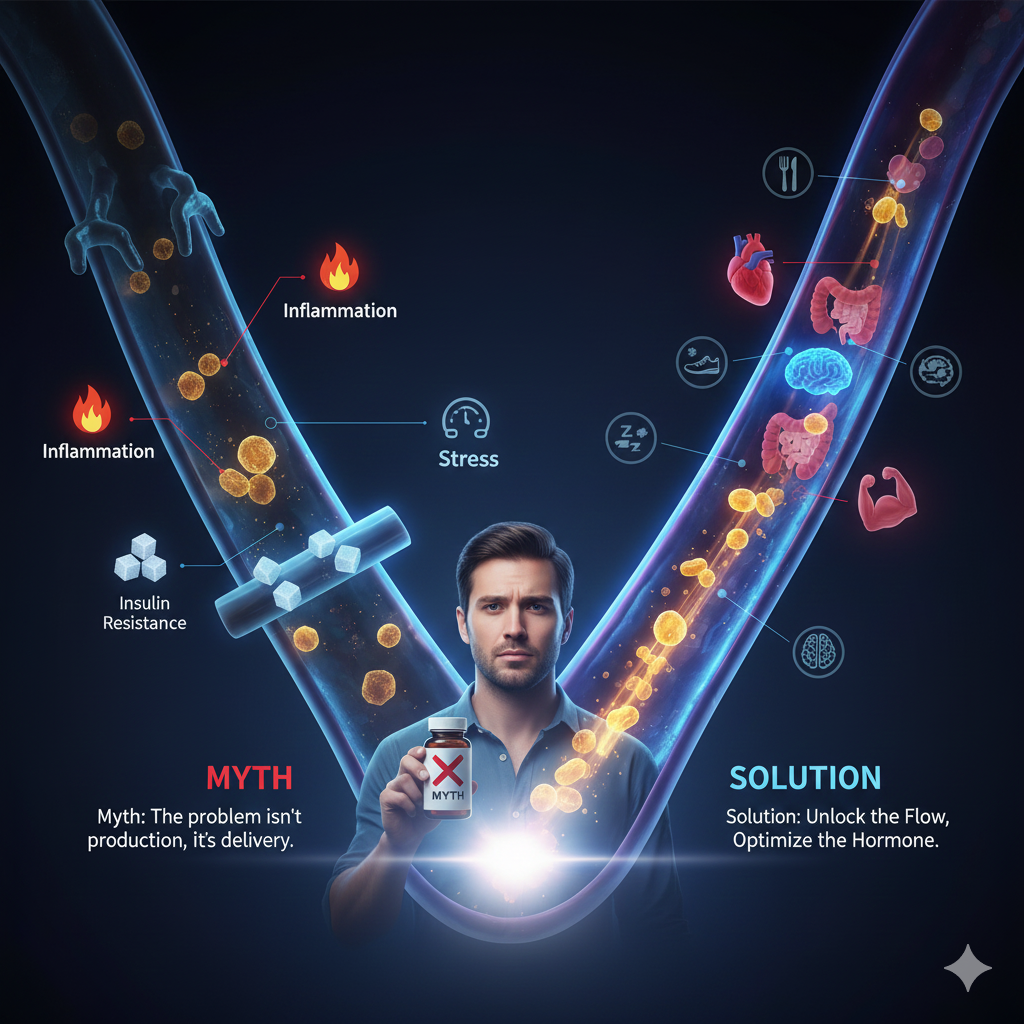
The reality is simple: testosterone influences sexual desire, but blood flow determines erectile performance. Without healthy circulation, even optimal hormone levels cannot sustain an erection.
The Common Mistake
Many men — and even some clinicians — fall into the same trap:
- Blaming testosterone alone
- Ignoring blood vessels, inflammation, and metabolic health
- Seeking hormone replacement without a complete evaluation
This approach often treats the symptom while missing the real underlying cause.
What Testosterone Actually Does
Testosterone plays a key role in:
- Sexual desire (libido)
- Energy levels and motivation
- Muscle mass and body composition
When testosterone is truly low, the most prominent symptoms are loss of libido, persistent fatigue, and muscle wasting — not isolated erectile failure.
When Testosterone Is Really the Problem
Testosterone deficiency is more likely when multiple symptoms are present, such as:
- Marked drop in sexual desire
- Intense or persistent fatigue
- Loss of muscle mass and strength
- Mood changes or low motivation
In these cases, hormone evaluation and treatment may be appropriate.
The Key Distinction: Desire vs. Mechanics
If sexual desire is present but erections are weak, inconsistent, or difficult to maintain, the issue is rarely hormonal. It is most often vascular or metabolic.
Erections depend on:
- Healthy arteries
- Proper endothelial function
- Adequate nitric oxide production
- Low levels of inflammation and insulin resistance
Without good circulation, testosterone alone cannot sustain an erection.
The Correct Approach
- Evaluating vascular health and blood flow
- Checking metabolic markers such as glucose, insulin, and lipids
- Measuring testosterone within the full clinical context, not in isolation
Hormones may spark desire, but circulation sustains the erection.
Conclusion
Addressing blood flow, metabolism, and vascular health is often the missing link in resolving erectile dysfunction — even when testosterone levels appear “normal.”