
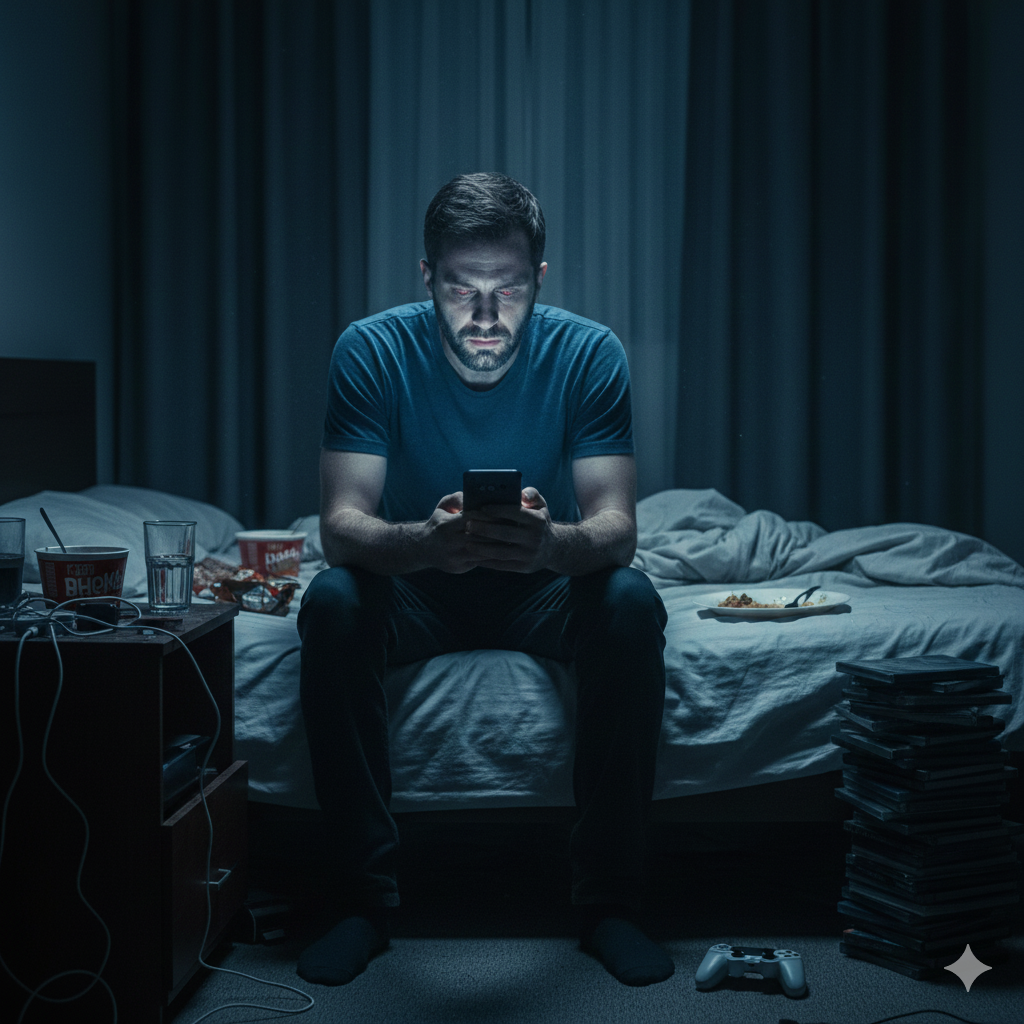
The Problem Isn’t Technology — It’s Excess
Modern digital environments are designed to keep dopamine levels artificially elevated:
- High-stimulation pornography
- Endless social media feeds
- Constant notifications and alerts
This continuous input trains the brain to expect rapid, exaggerated rewards, leaving it less responsive to natural, slower forms of pleasure.
Effects on Sexuality
When dopamine signaling becomes dysregulated, sexual health is often affected:
- Reduced natural arousal
- Difficulty staying mentally present with a partner
- Increased performance anxiety
- Weaker or less reliable erectile response
These changes reflect nervous system overload — not psychological weakness or lack of masculinity.
Recalibration Strategies
Restoring healthy dopamine sensitivity requires intentional boundaries:
- Reduce nighttime screen exposure, especially before sleep
- Schedule regular digital breaks throughout the day
- Prioritize real-world stimuli such as physical movement, human touch, sunlight, and rest
These practices help retrain the brain’s reward system and restore responsiveness to real intimacy.
Healthy desire requires a regulated nervous system.
Conclusion
When dopamine balance is restored, motivation, connection, and sexual responsiveness naturally return. Protecting mental health in the digital age is not optional — it is foundational to long-term male sexual health and well-being.