
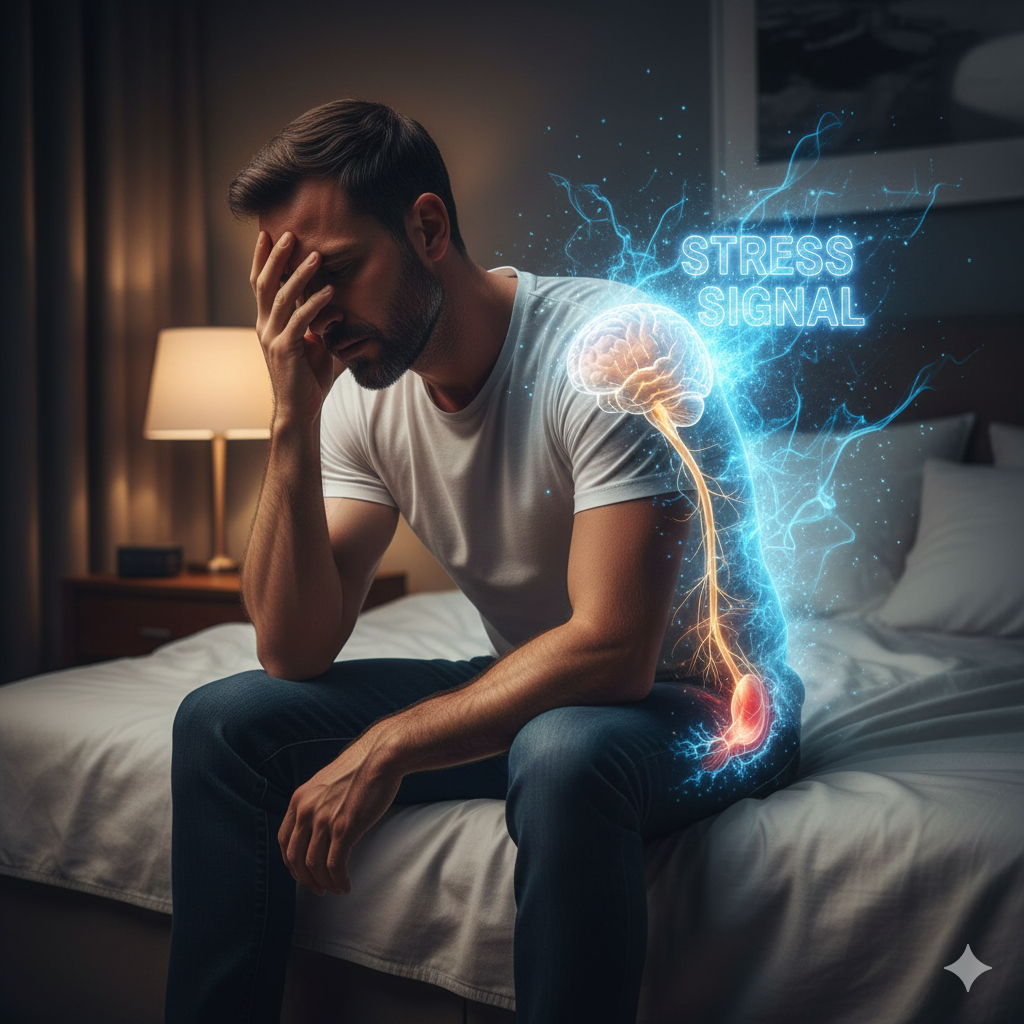
The result is predictable: the body prepares to survive, not to reproduce. Even with desire and stimulation, stress chemistry can block the conditions required for a natural erection.
How Anxiety Interferes with Erections
When anxiety is present, several anti-erectile processes occur at once:
- Cortisol and adrenaline rise
- Blood is redirected away from the penis toward muscles and vital organs
- Blood vessels constrict instead of relaxing
- Nitric oxide signaling is suppressed
Even with desire and stimulation, the physiological conditions for an erection are no longer favorable.
The Sexual Anxiety Cycle
Performance anxiety often follows a self-reinforcing loop:
- Fear of failure
- Increase in cortisol
- Vascular constriction
- Erectile failure
- Reinforcement of fear and anticipation
Over time, the brain begins to associate sexual situations with threat rather than pleasure.
Practical Strategies to Break the Cycle
- Reduce instant-gratification stimuli, such as excessive pornography, which can increase performance pressure and desensitization
- Use breathing exercises before sexual contact, especially slow nasal breathing to activate the parasympathetic system
- Shift focus from performance to sensation and pleasure, removing the “goal-oriented” mindset
These strategies help retrain the nervous system to interpret intimacy as safe rather than stressful.
An Important Reminder
Anxiety does not mean weakness. It means the nervous system is overloaded and stuck in survival mode. This is a physiological state — not a character flaw.
Conclusion
Relaxing the nervous system restores blood flow. When the brain perceives safety instead of threat, the body can re-engage the mechanisms that allow a natural, reliable erection.