
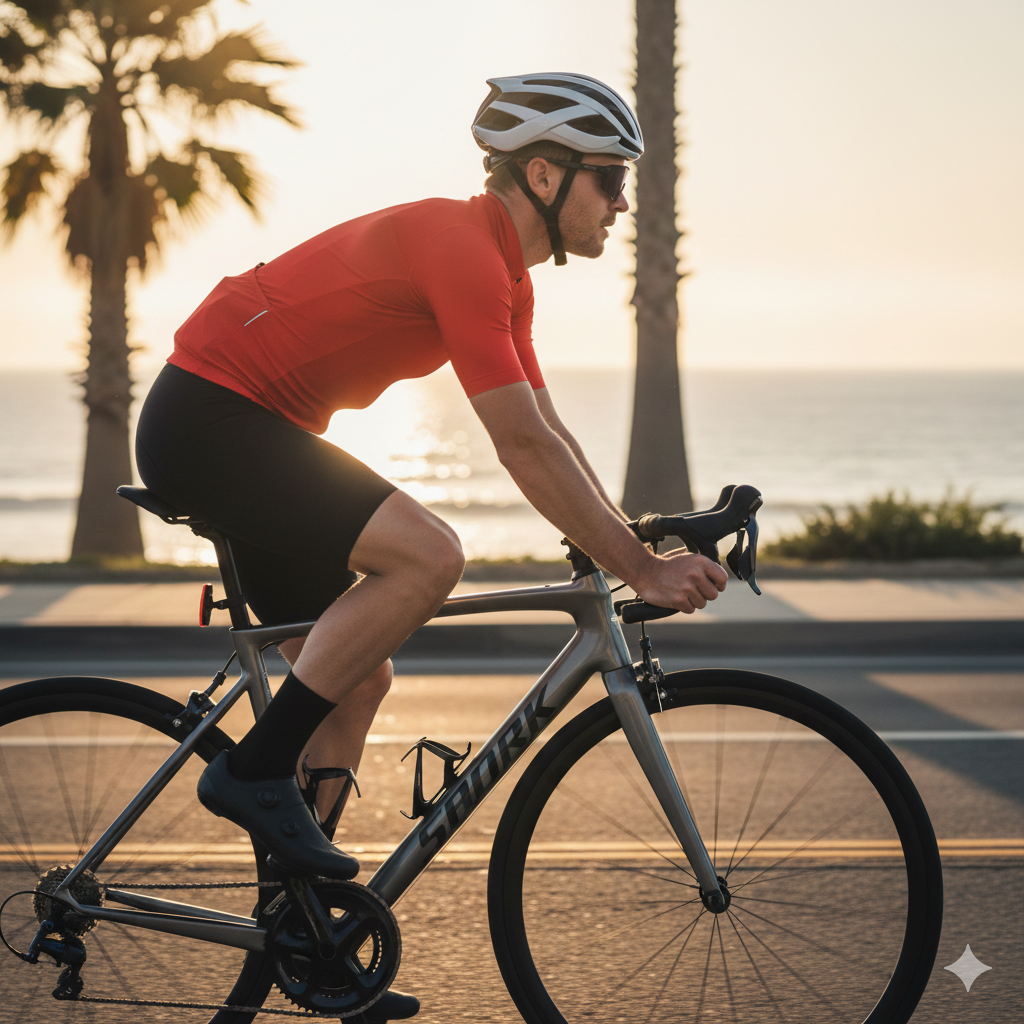
The Problem Isn’t Cycling — It’s How You Cycle
- Narrow saddles compress the pudendal nerve
- Continuous pressure reduces local oxygenation
- Perineal numbness is an important warning sign
When pressure is applied for long periods, nerve signaling and blood flow can be temporarily impaired, affecting erectile response during and after rides.
Protective Strategies
- Anatomical saddle with a central cutout
- Proper adjustment of saddle height and tilt
- Breaks every 10–15 minutes during long rides
These simple adjustments reduce pressure on sensitive structures while preserving the cardiovascular benefits of cycling.
Good News
With the right setup and habits, cycling can shift from a potential villain to a powerful ally for erectile and vascular health.
Athletic performance should not come at the cost of sexual performance.
Conclusion
Protecting nerves and blood flow while cycling ensures that your training supports long-term health — both on and off the bike.