
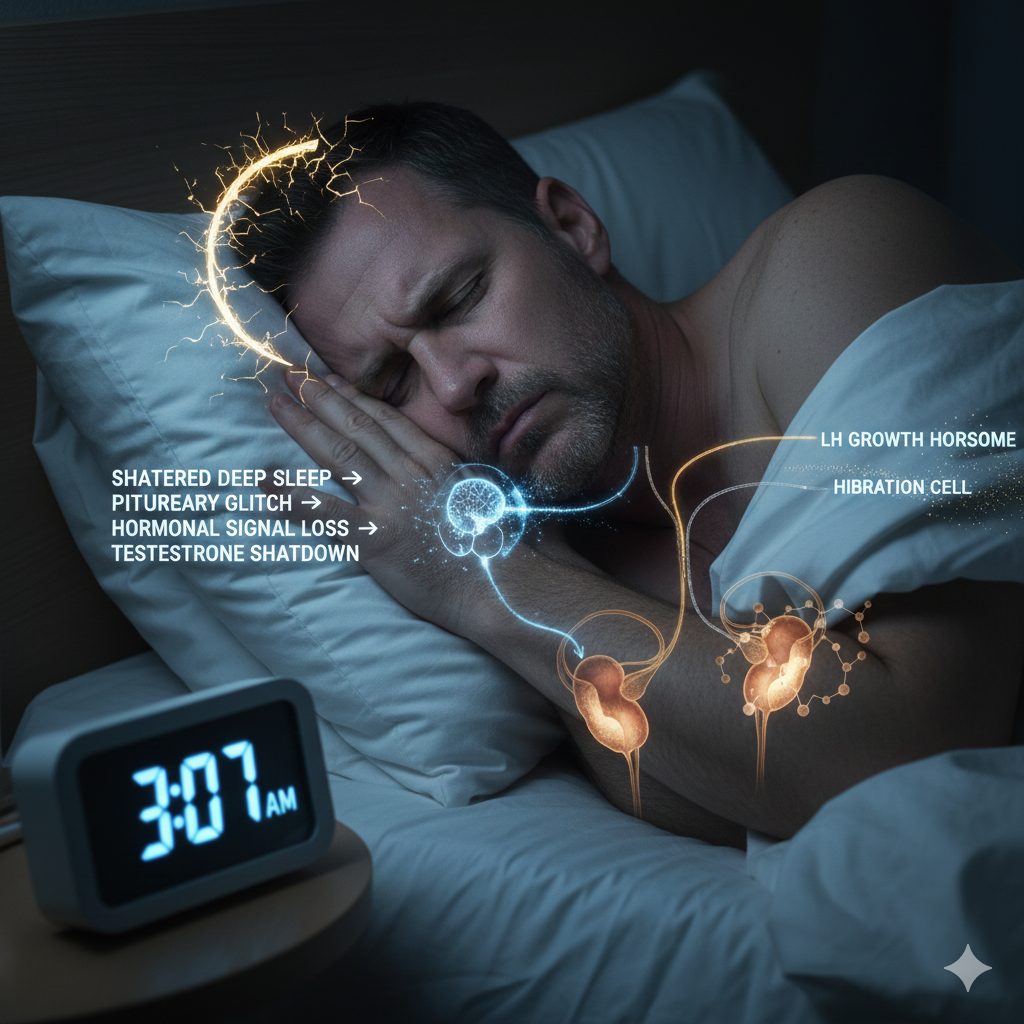
The Sleep → Testosterone Connection
Fragmented sleep triggers a cascade of negative effects:
- Reduced total testosterone production
- Increased cortisol and systemic inflammation
- Impaired libido, energy levels, and erectile function
Over time, this pattern contributes to chronic fatigue, reduced sexual performance, and metabolic decline.
Common Causes of Nocturia
Nocturia is usually a symptom, not a standalone problem. Common underlying causes include:
- Enlarged prostate (BPH): Interferes with normal bladder emptying
- Evening fluids or alcohol: Increases nighttime urine production
- Sleep apnea: Alters fluid balance and hormonal regulation
- Insulin resistance: Can lead to increased nighttime urine output
Treating only the bladder often misses the real drivers of the problem.
Initial Adjustments That Can Help
Simple, targeted changes may significantly reduce nighttime awakenings:
- Avoid fluids 2–3 hours before bedtime
- Limit or eliminate alcohol at night, which worsens nocturia and sleep quality
- Investigate prostate health and sleep disorders, rather than focusing solely on urinary symptoms
Why This Matters More Than You Think
Repeated nighttime awakenings quietly erode testosterone levels night after night. The hormonal cost accumulates, even if daytime symptoms seem mild at first.
Poor sleep caused by nocturia means losing testosterone without realizing it.
Conclusion
Protecting sleep continuity is not just about rest — it is essential for hormonal balance, sexual health, and long-term male vitality.